
Your Loyalty Program Can Now Show Up in AI Mode: Google Expands Merchant Center Loyalty to 14 Countries
If you run a loyalty program and you’ve been looking for a reason to finally connect it properly to Merchant Center, this is it.
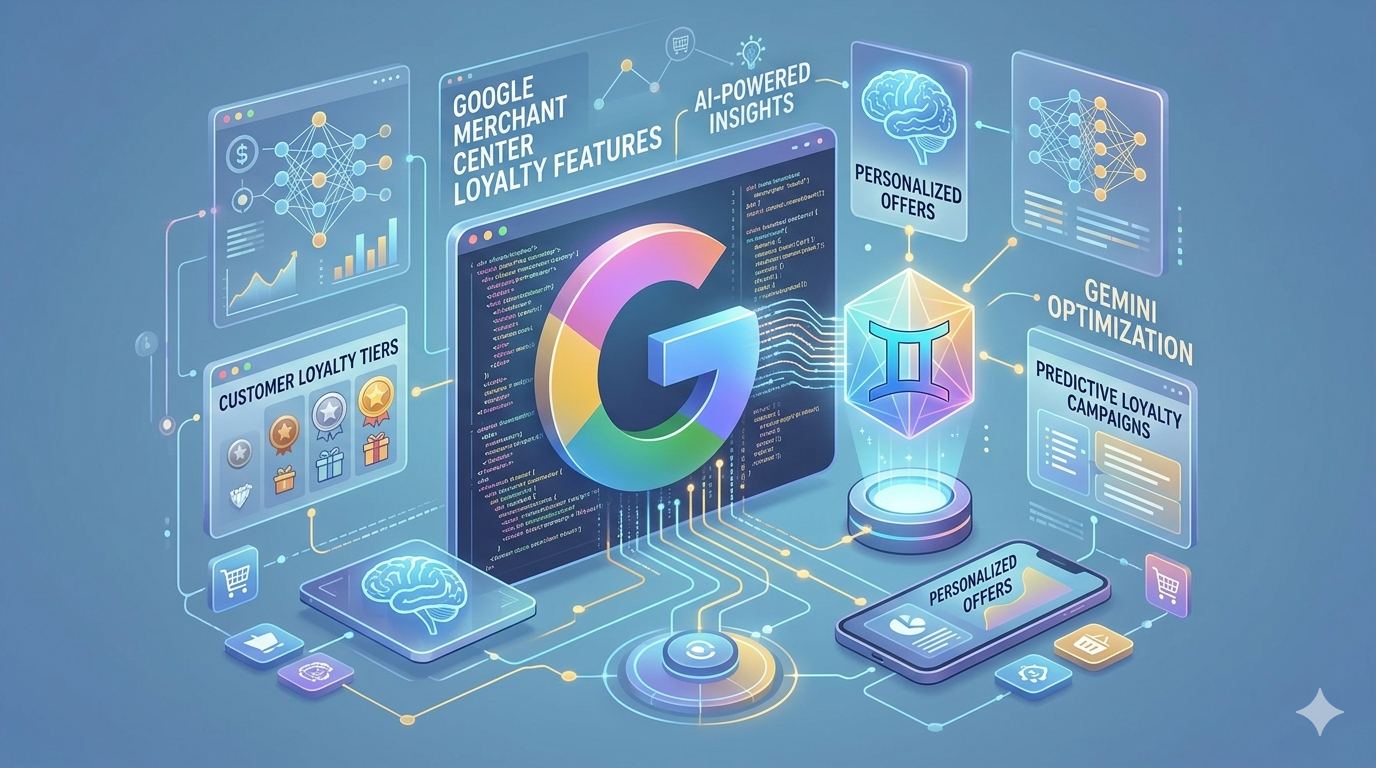
Google has expanded its Merchant Center loyalty features internationally and pushed member benefits onto its AI-first shopping surfaces for the first time. Member pricing, exclusive shipping perks, local inventory annotations – they can now show up not just in traditional Shopping ads, but in AI Mode and Gemini as well. The merchant center loyalty expansion covers 14 countries and marks a meaningful structural shift in how loyalty programs fit into Google’s shopping ecosystem.
This isn’t a minor quality-of-life update. It’s the loyalty program growing from a niche feed attribute into a signal that reaches shoppers across Google’s newest and fastest-growing surfaces.
What Actually Changed
There are four distinct things this update does, and it’s worth being precise about each one.
Member pricing and member shipping are now annotation-eligible on product listings. Merchants can surface loyalty-specific discounts and delivery options directly on their listings; visible to shoppers before they ever click through to a product page. These are not footnotes. They appear inline, at the moment of discovery.
Loyalty annotations have expanded to local inventory ads and regional Shopping ads. This is the part that matters most for retailers with physical locations. In-store perks and region-specific benefits can now appear in the formats that drive foot traffic not just in national Shopping campaigns. If you’re running local inventory ads and you have a merchant center loyalty programme, the two can now talk to each other in a way they couldn’t before.
Loyalty benefits are now visible on AI Mode and Gemini. This is the headline change. Google introduced shopping ads in AI Mode in February 2026, when the surface had already passed 75 million daily active users. Connecting merchant center loyalty program data to a surface at that scale creates a distribution channel that simply didn’t exist six months ago. If a shopper asks Gemini to help them find a product, your member pricing could be part of the answer they see.
The program is now live in 14 countries. Australia, Brazil, Canada, France, Germany, India, Italy, Japan, Mexico, Netherlands, South Korea, Spain, the UK, and the US. Until this merchant center loyalty rollout, the feature had been available in a much narrower set of markets. For international retailers, this is the first time the feature is genuinely within reach.
The Customer Match Requirement You Can’t Overlook
Two specific display features; member shipping benefit annotations and green strikethrough pricing for known loyalty members have a hard dependency on Customer Match. Without properly configured Customer Match audiences, those two variants won’t appear even if everything else in your feed is set up correctly.
This matters more now than it did a week ago. Google moved all Customer Match data uploads to the Data Manager API as of April 1, 2026. The older upload routes- OfflineUserDataJobService and UserDataService are now blocked. Any merchant implementing Customer Match as part of a new loyalty setup has to use the Data Manager API from the start. There’s no legacy pathway available anymore.
If you’re planning to activate strikethrough pricing or member shipping annotations and you haven’t already updated your Customer Match implementation, this is the first thing to sort out before touching Merchant Center settings.
🔗 Google’s broader push to connect loyalty data across its commerce surfaces is part of the same infrastructure story. It’s worth reading about Google Expands Universal Commerce Protocol: Cart, Catalog & Easier Onboarding Now in Play – because UCP’s Identity Linking capability is what allows loyalty benefits to travel with a shopper across platforms, not just within Google’s own surfaces.
One Number Worth Noting
According to Google, some retailers have reported up to a 20% lift in click-through rates when showing tailored offers to existing loyalty members. Search Engine Land Sephora US is among the brands cited in connection with that figure.
That’s not a conversion rate or a revenue metric- it’s a CTR improvement, which means it measures intent, not outcome. But for a Google merchant center loyalty feature that was previously invisible to most shoppers before they landed on a product page, getting a 20% higher rate of people choosing to click through is meaningful. The member offer is doing work in the discovery phase, not just at checkout.
A Note on Local Inventory and Product ID Separation
There’s a technical wrinkle that’s easy to miss. Google required retailers to split product IDs for online and in-store versions by March 2026, where product attributes differ. Merchants who are now implementing loyalty annotations on local inventory listings need to make sure their in-store product IDs are correctly separated from their online counterparts. The loyalty attribute configuration can vary by channel, and a feed that hasn’t been restructured for this split may not serve annotations correctly even if the campaign setup looks right.
For retailers in Germany and other markets where Shopping ad delivery is segmented regionally rather than nationally, regional Shopping ad configurations will also need to account for how loyalty attributes are handled at a regional level. Google’s announcement doesn’t provide per-country technical specifics here, so testing will be necessary before assuming national settings carry across.
🔗 The connection between AI Mode and shopping surfaces is moving fast. We covered Google Search Live Is Now Global: What the Worldwide AI Mode Rollout Means for Search in 2026 – because if you’re making decisions about which surfaces deserve investment, understanding where AI Mode stands globally is directly relevant to how much weight this loyalty expansion should carry.
How to Get Started for Merchant Center Loyalty Programme
The setup path is straightforward in principle, even if the technical requirements add up quickly in practice.
Activate the merchant center loyalty programme add-on in your Merchant Center account. Configure member tiers, set up pricing attributes for member-specific discounts, and add shipping attributes for loyalty-specific delivery options. Connect your Customer Match lists in Google Ads; this is required for strikethrough pricing and member shipping annotations to display. For the AI Mode and Gemini surfaces, no separate integration is needed beyond having your feed and Customer Match correctly configured. Google will pull from the same data.
US merchants can also apply to join a pilot that uses Customer Match as a relationship data source for free listings. If you qualify, this creates a path to loyalty reach that doesn’t require additional ad spend; your member offers can surface in free listings to known members identified through Customer Match.
Opositive’s Take
The expansion of Merchant Center loyalty features to 14 countries is notable on its own for international retailers, this is a genuine unlock. But the more significant change is the connection to AI Mode and Gemini.
The merchant center loyalty program was previously a tool for the bottom of the funnel: a way to reward people who were already buying. Surfacing member pricing and shipping benefits in AI-generated answers puts that signal at the top of the funnel, at the point where a shopper is still deciding what to buy and where. That’s a different kind of visibility, and it’s the kind that compounds better discovery leads to more members, more members means richer Customer Match data, richer data means better annotation eligibility.
The practical reality is that most retailers haven’t fully activated their loyalty feeds even in markets where the feature has been available for a while. Now that it’s global and connected to AI surfaces, the gap between retailers who have this set up and those who don’t is going to become more visible. The setup work is not trivial, particularly if your Customer Match implementation needs updating for the Data Manager API migration. But it’s the kind of work that pays off in exactly the surfaces Google is putting its weight behind.
Stay updated with the latest Google and eCommerce news at news.opositive.io